留白.
Not every space needs to be filled.
A thousand-year-old idea for a very noisy century.
LIUBAI — Contemporary Song Living
留白
In Chinese aesthetics, this idea is called LIUBAI (留白)—the beauty of intentional space. It reminds us that what is left open can be just as meaningful as what is present. In painting, it invites the imagination beyond the edge of the brush. In architecture, it allows light and shadow to breathe. At home, it creates calm, balance and a sense of possibility.
The paper is the painting.
In Song Dynasty painting, the empty part of the paper is not empty at all. The mist between mountains, the silence around a single branch, the space where a river dissolves into sky — that is where the painting breathes.
留白 (liú bái) is the name we give to that decision. To leave white (empty space). To trust that a smaller mark, placed with care, will carry further than a full page.
A thousand years later, we are still asking the same question. Not how much can we put on the wall — but how much can we leave alone.
A quieter home.
A calm room is not the absence of things. It is the absence of visual noise between them. A single well-made chair. A wide plaster wall. Warm afternoon light on wood.
LIUBAI makes artworks for those walls. Large, unhurried pieces designed to slow a room down — and to give the people inside it somewhere quiet to rest their eyes.
We do not decorate. We compose stillness.
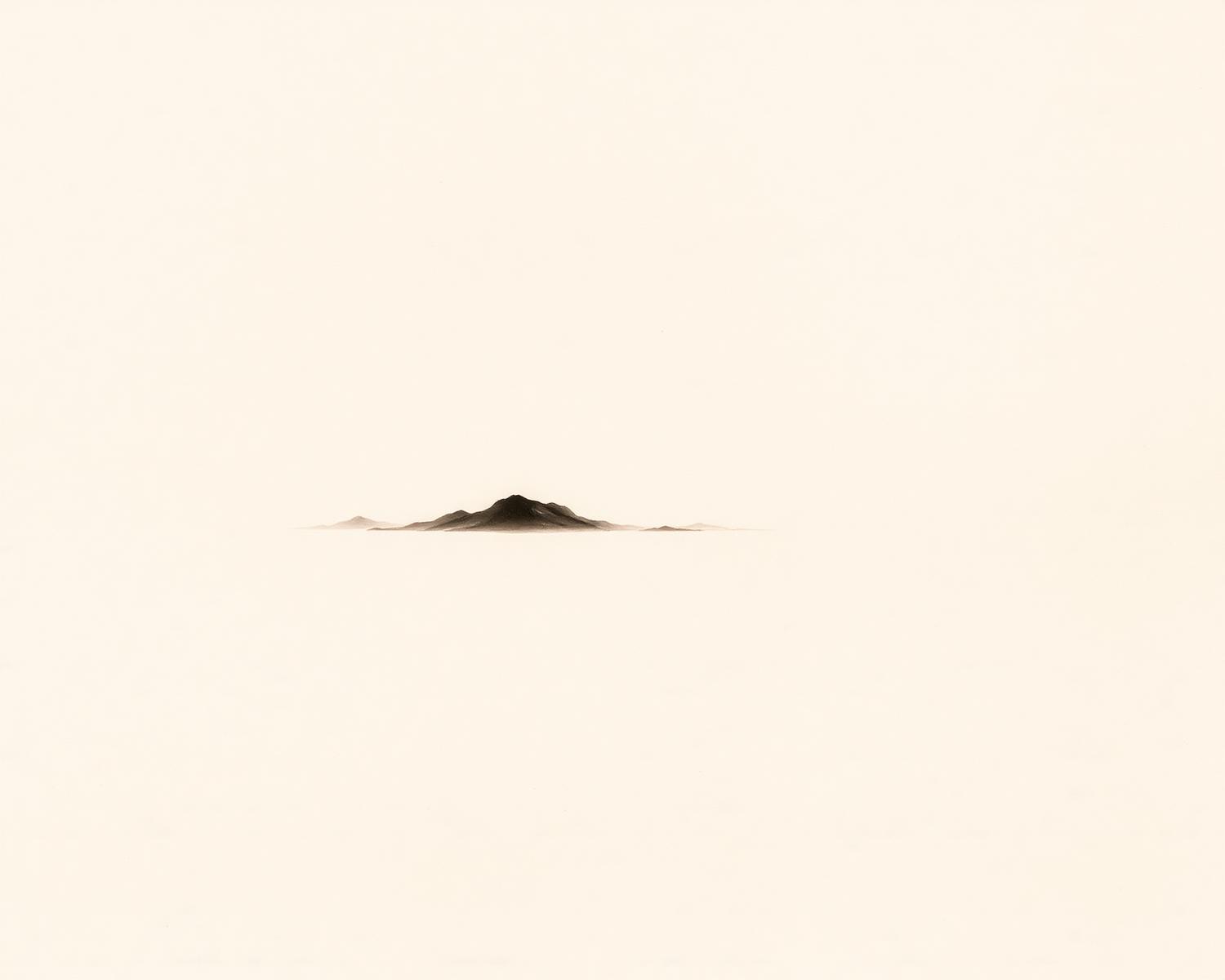
The first collection is being drawn now.
Eight artworks, four collections, one philosophy. Currently under development in the studio.